Once again, I registered for the once-a-year opportunity to speak to this statewide policy-setting group: The Pennsylvania Opioid Misuse and Addiction Abatement Trust (POMAAT, or the “Trust”), established in May of 2022 and governed by a 13-member Board of Trustees.
Some of my colleagues feel like our time and effort will be wasted. Read on for why.
Yet if keeping the public at arm’s length is the goal, I’ll persist. I can be obsessively tenacious when transparency and fairness are at stake.
The blog post below about my experience last year was started a long time ago, then set aside as I juggled projects. It seems timely to publish it now, before the 2026 “Public Listening Session”.
What do you have to hide? I asked Pennsylvania’s powerful state opioid settlement board in August 2025.
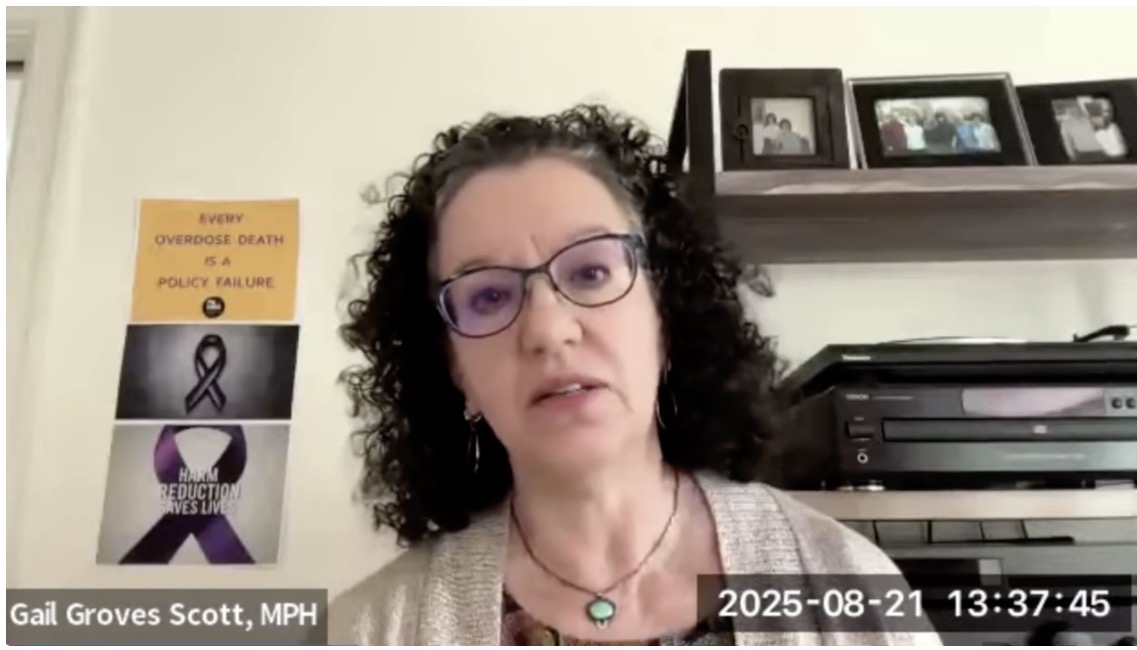
I was visiting family out of state, but I’d still registered to speak in the hybrid meeting on Zoom. As I set up my laptop, I carefully positioned framed family photos on the shelves behind me. They were my “easter eggs,” the hidden message only a few close family or friends might spot; inspiration for my public health policy advocacy work. In these pictures were two beloved young family members. Their lives sadly cut way too short.
With just 5 minutes to address the Trustees. I’d been repeatedly editing my remarks throughout the day, cutting topics I’d wanted to discuss because of the limited time allowed. We’d been told there would be no responses from the Board during the meeting. No dialogue allowed.
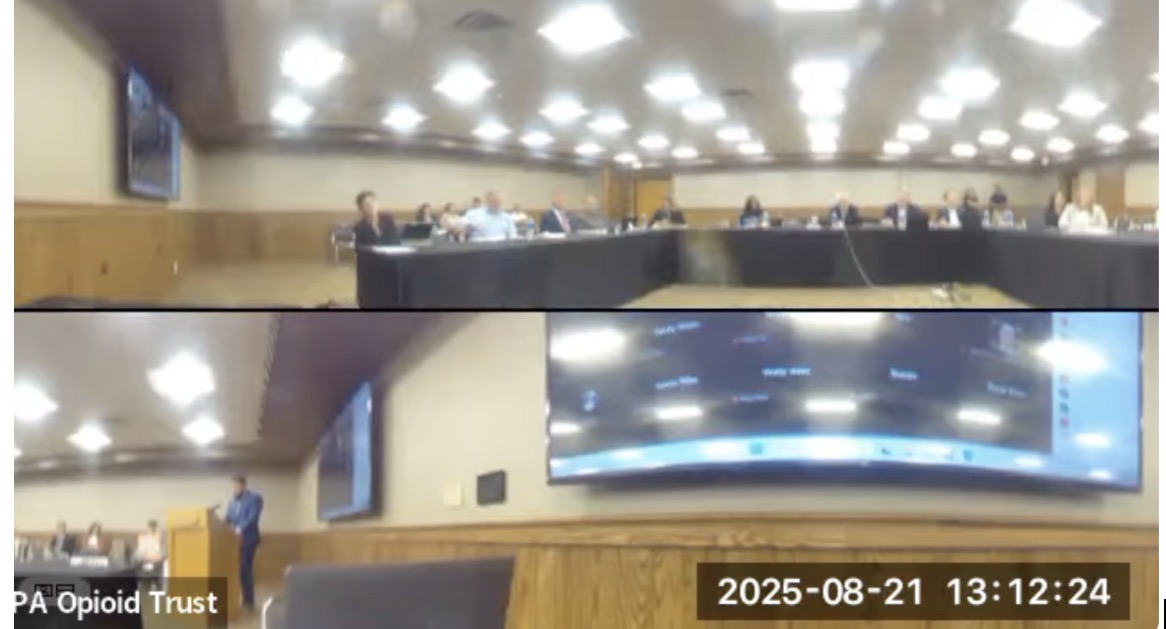
The speakers who started the session were there in person. We could hear the speakers but barely see them because of the odd, distant camera angle, apparently from a laptop. The view of the podium and board members was too blurry for viewers online to make out their expressions.
Wow, it’s just as well I chose to speak on Zoom, I thought. At least the audience will be able to see me.
My turn came. I smiled into my laptop camera at the audience I couldn’t see. I introduced myself as a parent, researcher, and former pharma employee. I described my expertise in areas directly related to the work they’d been tasked with overseeing, including my research on access to medications for opioid use disorder.
I’d been a whistleblower who helped the federal government prosecute opioid companies. I’d testified before a grand jury in the Purdue Pharma case. Their long-delayed settlement was about to be finalized for $7 billion.
This is personal to me — how these funds are being spent.
My tone was curious, perhaps a bit exasperated, rather than angry. I respected the Trustees’ time commitment to this public service. I believed they recognized the importance of their task: reviewing settlement expenditures for compliance with the settlement’s rules and accepting and disbursing the funds.
I didn’t hesitate, though, to politely but pointedly call out their Chair, Tom VanKirk.
I think you’ve lost sight of who your client is here.
You are representing me;
you are representing the public, to see that this unique and finite stream of funds is not wasted.
I couldn’t see him or anyone attending as I said this online. Did anyone have a reaction?
I’d met Mr. VanKirk the year before, when I showed up for the first public Board meeting in Harrisburg, held after criticism of multiple non-public or virtual-only meetings. Several Trustees attended online, but those who attended the Harrisburg meeting avoided speaking with me in the hallway. It felt as if chatting with public attendees was somehow unseemly. Or were they uncomfortable with the controversies their Chair had sparked?
I managed to have a brief conversation with Mr. VanKirk on the first day, as he tried to rush out. A retired attorney, he struck me as affable and enthusiastic. He had already devoted many hours of his retirement to this community service.
The early secrecy of this board’s meetings have been well documented:
- The board’s leadership has been dismissive of the Sunshine Act despite claiming that they follow it.
- You hired multiple vendors and contracted for professional services without putting out a public request for proposals or a bid process.
I found the Board’s decision to hire the law firm where Mr. VanKirk was a longtime partner and former CEO, through a noncompetitive process, troubling. I was unable to ask about the details before their vote (with Mr. VanKirk abstaining). They also chose their research partners without a bidding process or proposal opportunity. As an academic researcher whose university was among dozens not consulted, I found this surprising.
Your transparency got a rough start, in our view; but you’ve been doing better in some ways.
It turned out we shared the view that settlement funds were not intended to fund county prosecutors or policing, an issue I was battling in Lancaster County. Still, I told Mr. Van Kirk that the county policymakers were frustrated by the Trust’s slow start to provide them clear guidance.
I didn’t sway Mr. VanKirk’s dismissal of the public during this in-person interaction. Perhaps the national attention to this issue, or internal pressures, led to the minimal concession in 2025: this first Listening Session.
You have made the choice to oppose and litigate requests for transparency, instead of just being transparent.
So far, Mr. VanKirk has been successful in a troubling effort to shield the Trust’s financial and administrative records from the standard scrutiny allowed of government documents under PA’s Right to Know Law (RTKL). The Trust’s odd status as a creation of the court, and not of state or local government, isn’t described in the language of the RTKL. PA Spotlight and its reporter, Ed Mahon, lost an appeal to access these documents.
I commended former Trustee PA State Senator Greg Rothman for raising concerns about:
- the Trusts’ spending on litigation.
- closed “working group” meetings where major decisions are made.
- private executive sessions.
Senator Rothman stated that the Board was likely violating PA’s Sunshine Act at Mr. VanKirk’s “unilateral direction,” PA Spotlight reported in 2024. Senator Rothman resigned as a Trustee before the August 2025 meeting.
I reminded the Board:
You chose secrecy; it was not forced on you.
My call to action for the Trustees for their next meeting:
I ask this board to make a motion: to allow public input, not only public comment periods at the end, but input before voting.
To get input from the experts who could help you with the complex decisions you were making – before you vote. That public dialogue that is sadly missing today.
My closing sentence was to introduce our child’s experience with harm-reduction interventions, but I was interrupted by Chairman Van Kirk calling time.
Two Trustees sent me brief messages, and I replied, but we didn’t meet in person.
At their next Board meeting, no reforms were initiated or discussed publicly, to my disappointment.
My pointed questions, my call-out of Chair VanKirk, my own expertise and connection to these funds, and my call for reform were omitted from the meeting minutes’ bland 1-sentence summary of my speech.
The full meeting can be viewed online, as with other public Board meetings since March 2023, but the unprofessional audiovisuals make it hard to sit through. Is that the point?
I’ve extracted my 5-minute 2025 talk for you to view here. Feel free to email me your thoughts.
Video: https://youtu.be/BCyCWNAsYFg?is=SYCc3XOZQlvKnbIT
Transcript: https://healthpolicynetwork.com/wp-content/uploads/2026/08/Opioid-Trust-Aug2026-Transcript-Gail-Groves-Scott.pdf
Will anything be different at the Thursday, August 6, 2026 “Public Listening Session”?
It’s not looking likely, so far.
A coalition of policy advocates held a press conference after the August 2025 meeting. There will be another in 2026, too. The group includes bereaved parents who have fought for better policies and improved access to treatment, as well as Pennsylvania Harm Reduction Network leaders.
Although not the reason for the press conference, some attendees mentioned the unwelcoming tone we felt at POMAAT’s first Listening Session.
In 2025, an attendee who drove for hours to reach the remote resort in western PA sought a glass of water before the session began. She was denied entry to the room where the Trustees had their catered lunch.
Last year, some of us were interrupted mid-sentence, presumably due to time constraints, yet the session ended half an hour early. In four years of meetings, Chair VanKirk has not made a habit of interrupting Trustees, their staff, or invited guests mid-sentence.
When opioid policy advocates discovered that this year’s speaker pre-registration form had been abruptly taken offline, we sent the Trust this letter.
We requested the full time allotted for the session. We pointed out that, once again, the pre-registration process was arbitrary and opaque.
We provided suggestions on how they could do better.
They don’t want to do better.
I conclude this because the 2026 “listening” session was quietly cut in half, from the scheduled 1.5 hours to 45 minutes.
We just learned that only 5 people managed to register this year!
Speakers’ names, affiliations, and the speaking order were not listed in the 2025 agenda or newly posted 2026 agenda, even after our letter asking for this minimum courtesy for meeting attendees. It’s almost comical.
On Sunday 8/2/26 I emailed POMAAT’s administrator, Brie Anderson my follow-up questions.
- Why has POMAAT reduced the public comment session time for the August 6th meeting? Does [this]… demonstrate a denial of our request for a flexible use of the time, as it appears to?
- Will there be a camera specifically for speakers at the podium, in light of last year’s dismal and unprofessional viewing experience for online meeting attendees?
I further noted that boards serving the public in our Commonwealth frequently allow public comment from any members of the audience or provide an on-site registration process.
- The way public comment is managed is an arbitrary choice by the Board’s leadership.
- Public comment protocols are not described in your bylaws. To our knowledge, they have not been publicly discussed and voted on by the Trustees.
- You can change them at any time.
On Tuesday afternoon, I received a response. It sounds like it was written by a lawyer, with words like “albeit”. It can be summed up this way:
Nope. We listen to you voluntarily, not because we are obligated to. We said what we said.
We announced the registration period one time [at the end] of our May board meeting.
The meeting was shortened because only 5 people registered. You still only get 5 minutes though!
We will not change our protocols.
We did share your coalition’s letter with the Trustees.
Best regards!
Woo, hoo. We can get out early now, time to go take our kids/grandkids/selves swimming in the waterpark! (I am guessing about this part).
Advocacy gaps and next steps:
Two Trustees messaged me after my talk in 2025, and I replied, but we didn’t meet in person. I haven’t had the bandwidth over the past year to reach out individually to the Trustees, although some other advocates have. I regret this. I enjoy meeting with legislators and other policymakers.
But maintaining laser focus during the last year of my dissertation research has been challenging. I have had to drastically cut back on in-person advocacy. It will be a different story a year from now.
A group of parent advocates, led by Susan Ousterman, has proposed amendments to the Commonwealth Court order, seeking support from the Governor’s office. Governor Shapiro has stated he “expects transparency” from the Trust.
The parent advocates also called on Governor Shapiro to appoint a new POMAAT Chair if he aims to make the Trust’s culture more responsive and accountable to the public. Last year, I was hopeful for change; this year, I must agree.
Learn more:
Spotlight PA’s excellent coverage of the POMAAT and opioid settlement spending statewide
https://www.spotlightpa.org/series/opioid-settlement-money/
See coverage of Lancaster County’s opioid settlement decisions on my In the News page, under Opioid Settlement Fund Advocacy.
PA Opioid Settlement Database
https://www.paopioidsettlementdata.org/
PA Spotlight Opioid Settlement Spending Database
https://www.spotlightpa.org/news/2024/11/pennsylvania-opioid-settlement-money-spending-data/
Pennsylvania Opioid Settlement Tracker (Vital Strategies)
https://www.opioidsettlementguides.com/pennsylvania
See my Resources page for more.
Recent Comments